

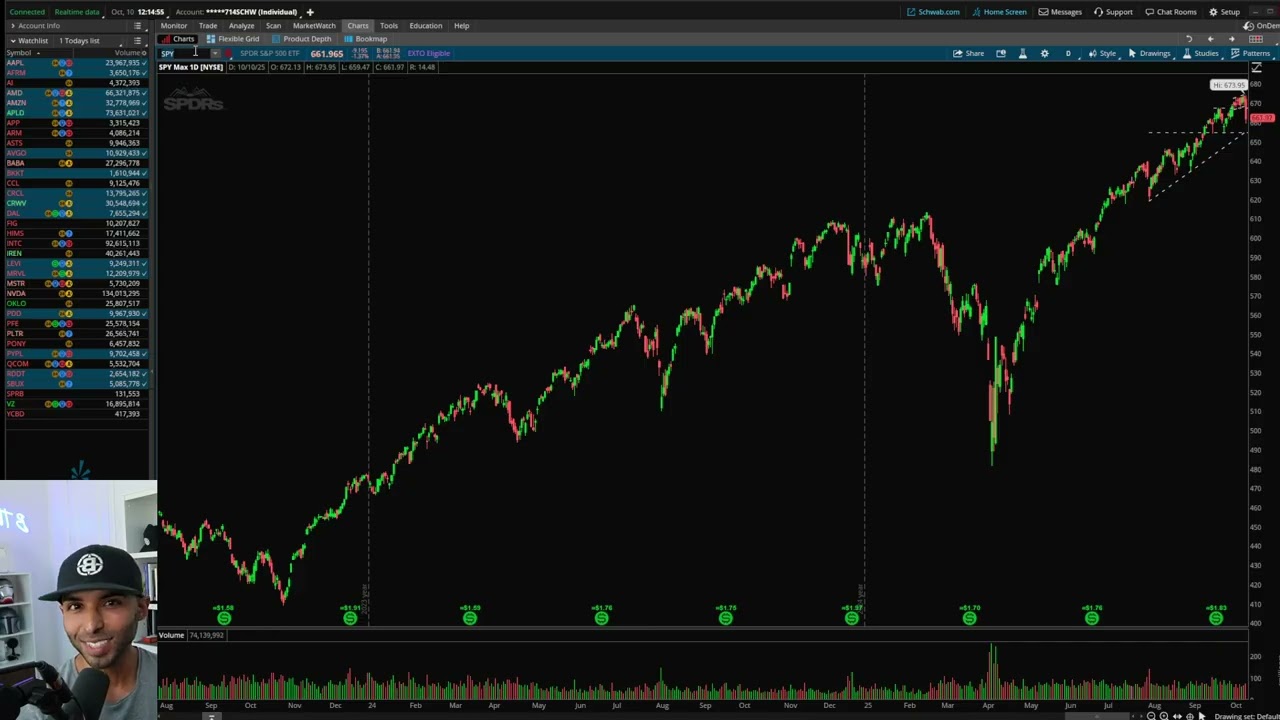
pulling to the 590s and we want to hold that level.
breaking some key levels right now.
On the B The Trader channel, the host brings a calm, practical voice to fast-moving markets. This article distills a recent update into clear, beginner-friendly takeaways for navigating a stock market sell-off. Many new traders feel overwhelmed when prices plunge, mistaking volatility for a reason to abandon a plan. The insight shared in this video centers on reading key levels, keeping risk in check, and sticking to a simple, repeatable process. If you’re learning to trade in real time, the approach here offers a reliable framework you can apply today.
Morning Tension in Real Time: A Relatable Market Moment
The video opens with a candid snapshot: the market is tanking, and the host notes the SPY is already down about 1.4% while the Qs flirt with sharper declines. It’s a scene many beginners fear—rapid red numbers, headlines flashing across the screen, and the sense that “this time it’s different.” Yet the host reframes the moment not as chaos, but as data to study. The narrative centers on watching how price action interacts with critical levels and how quickly sentiment can flip when you know what to look for. This moment is a powerful reminder that volatility isn’t a signal to abandon strategy—it’s a test of discipline and process.
In practical terms, the host points to the idea of “key levels” being tested as the market moves. The emphasis is on staying patient and letting the chart tell you what to do next, rather than chasing moves or guessing where a bounce might occur. If you’re new to trading, this section is a vivid example of why having a plan matters more than trying to predict every swing.
- Identify the referenced levels on major indexes (for example, the SPY and the Qs).
- Observe how prices behave around those levels rather than reacting to every tick.
- Respect predefined risk controls to avoid overexposure during sharp moves.
Takeaway: In a stock market sell-off, the market tests important price zones. Treat these tests as information, not excuses to change your plan. By focusing on technical levels and controlled risk, you improve your odds of preserving capital while waiting for a clearer setup.
Decoding the Move: What the Price Action Is Telling You
The core message of this section is simple: fast declines aren’t random; they reveal how buyers and sellers are weighing risk at specific levels. The host notes that the market is breaking a key level and then discusses the strategy of “pulling to the 590s” with an objective to hold that support if possible. This way of speaking anchors a practical approach for beginners: don’t chase a bounce; observe whether price can hold a level, which then informs your next steps.
To translate this into everyday trading practice, consider the following framework:
- Mark your chart with obvious reference points (e.g., the 590s region on a hypothetical instrument, and broader levels like 603 referenced in the discussion).
- Wait for price to approach a defined level before acting, acknowledging that not every drop needs a trade.
- Use a disciplined exit plan that prioritizes risk control over the allure of a quick reversal.
From a beginner’s perspective, the takeaway is not that volatility is your enemy—it’s that your plan must stay in front of the volatility. The video’s emphasis on key levels and patient confirmation shows a straightforward path through the fog of a sharp drawdown. This is where stock market sell-off concepts become actionable, especially when combined with a clear mindset about risk and context within the broader market.
Practical Components to Add to Your Watchlist
While watching the video, you’ll notice the host’s method can be distilled into a few concrete steps that you can apply in real time. Start with a short, actionable checklist for days when the market is moving fast:
- Identify the major levels that are likely to matter (support and resistance zones).
- Assess the price reaction to those zones—does the price bounce, consolidate, or break?
- Determine your maximum risk per trade before taking any action.
These elements are not a rigid prescription; they are a framework you can adapt as you grow more comfortable with market rhythms. The language of the video—levels, holds, and breakouts—helps you build a vocab of trading decisions that don’t rely on luck.
From Reaction to Strategy: Shifting Your Trading Mindset
The insight in this section centers on mindset. When markets fall hard, a common impulse is to panic and improvise. The host instead instructs viewers to anchor their actions in a plan built around specific, observable signals. The shift is from “I hope this rebounds” to “I will act only when the predefined criteria are met.” This is a fundamental change that separates beginner chatter from consistent practice.
Key ideas to internalize include: controlling risk first, letting price behavior confirm the next move, and respecting the pace of the market rather than forcing a trade. In the context of the current pullback, the emphasis on watching whether the market can hold established levels becomes a discipline that protects your account while allowing you to participate when a valid setup appears.
Takeaway: A calm, prepared mindset makes room for objective decision-making in the heat of a sell-off. By tying your actions to concrete levels and a clear risk framework, you reduce the emotional influence of market volatility. This approach is especially beginner-friendly because it translates complex price dynamics into straightforward signals you can learn to recognize on any chart.
Grow Your Trading Foundation with Traderfriends
As you build confidence in reading fast moves, consider connecting with a broader community that emphasizes method, risk management, and ongoing learning. The path from curious beginner to consistent trader is paved with shared insights, practice, and accountability. The recommended next step is to explore a structured environment that aligns with this disciplined approach to market moves and level-based thinking. You’ll find resources, frameworks, and peers who value precision over impulse, which can accelerate your progress and help you stay in the game during tough days as well as strong ones. Remember, the most important gains often come from steady, deliberate practice—one well-considered trade at a time.
In closing, the video on the B The Trader channel teaches a practical way to approach a stock market sell-off: identify the key levels, observe price behavior, and act only when your plan is clear. This method is accessible to beginners and scalable as your confidence grows. If you’re searching for a supportive environment that mirrors this approach, consider joining Traderfriends to deepen your learning and connect with like-minded traders who value discipline and continuous improvement.


